


Education

The Education Commission, relaunched in 2025, is working to ensure that the specific perspective of Engineering Schools is distinguished from that of other national stakeholders and taken into account in defining the national strategy for skills training at levels 2 to 8 in higher education when developing corresponding public policies.
Between strong professionalisation and connection to academic research, the training model of French Engineering Schools is a unique offering in national and international higher education systems.
Indeed, the demographic, social and economic changes that characterise the current era require schools not only to defend their training model, but also to consider adapting it to the present reality in order to better meet the aspirations of young people, provide high-quality technical and cross-disciplinary skills to society, and anticipate needs related in particular to climate change and geopolitical uncertainty.
- Chaired by Romain Laffont, dean of Polytech Marseille
- Vice-chaired by Christophe Baujault, dean of the UTC
- Vice-chaired by Sabine Brun-Rageul, dean of Bordeaux Sciences Agro
The role of the Education Commission
The Education Commission aims to uphold the distinctive nature of the Engineering School model and to contribute to the development of public policy relating to education. Its objective is to ensure recognition of the value of this model, which is based on a high degree of professionalisation and close links with academic research, whilst supporting its adaptation to current changes.
The priority topics of the Education Commission
- the development of three-year degree programmes (bachelor’s degrees, assistant engineer qualifications);
- the attractiveness of degree programmes;
- the development of institutional qualifications and professional certifications;
- the expression and development of the link between education, research and innovation;
- new teaching methods and approaches;
- the evaluation of degree programmes;
- the competence-based approach;
- the professionalisation of degree programmes and apprenticeships;
- continuing professional development;
- pursuing doctoral studies, and the promotion of pathways leading to the title of Doctor of Engineering;
- business start-ups and the development of an entrepreneurial mindset.
Find us on social media! #CDEFI



CONTACT US :
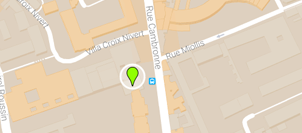
2 place Maurice Quentin
75001 Paris - FRANCE